


Orange wine has been the topic of wine bar chat for years. Made from white grapes that are allowed to ferment in fermentation vats with their skin, this amber-hued curiosity captured the imaginations of daring drinkers everywhere. But a new player is coming out from under the shadows (literally). A true black wine, so dark it almost looks inky in the glass, is quietly sweeping through the natural wine community and the ranks of innovative winemakers.
Mysterious bottles filled with wines produced from teinturier grapes, a rare variety of grapes whose skin and flesh are deeply coloured. Teinturier varieties – Once scorned as the cheap “tinting grapes” used to add color to mass-produced wines – teinturier varieties are enjoying an unlikely renaissance. From hip wine bars in New York to experimental vineyards in Vermont, these lost grapes are demonstrating they’re worth taking seriously.
What Are Teinturier grape varieties?
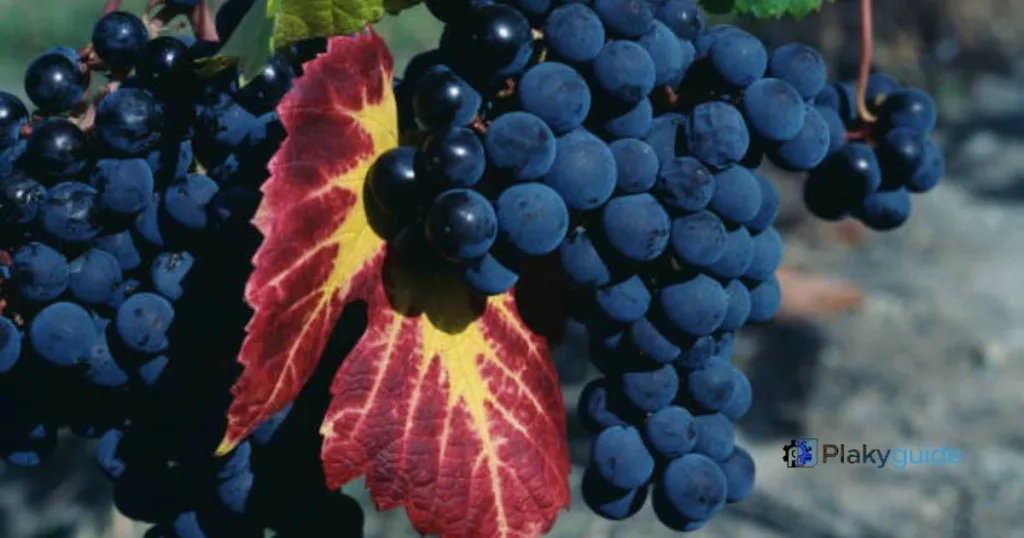
Here’s the secret of most red wine grapes – they’re white or pale green on the inside. As a result, the deep ruby of your Cabernet is all coming from the skins during fermentation. Teinturier grapes are completely breaking the rules. Both the skins and the pulp are saturated with deep red pigments, producing so intensely colored wines that they look as if they are absorbing light.
The most well-known example is Alicante Bouschet, a grape that makes such dark-colored (bordering on black) wines. When you crush these grapes, the deep crimson juice gushes from them instantaneously – without any contact with the skin. This particular feature makes teinturier grapes natural workhorses for making deeply pigmented wines with minimal manipulation.
The word teinturier is derived from the French “dyeing,” and it’s an apt description for grapes that can color your hands, clothes, and glass with just a touch. Planted to less than 1% of the world’s vine grapes, these varieties are rare in the vineyard and in the cellar.Teinturier grapes are a rare group of red grape varieties that have red-colored flesh and juice, unlike the clear juice found in most other red grapes. The name comes from the French word for “to dye or stain”. They are often used in blends to add color intensity to wines made with lighter, less pigmented grapes.
Teinturier grape varieties
Traditional teinturier grapes
- Alicante Bouschet: Created in 1866 by crossing Petit Bouschet and Grenache, this is one of the most well-known teinturier grapes. It’s widely planted in Spain (where it’s called Garnacha Tintorera), Portugal, California, and France.
- Saperavi: A highly regarded teinturier grape from Georgia, it produces wines with an inky, deep color and complex flavors. It is widely used throughout the former Soviet Republic.
- Colorino: An Italian teinturier grape, primarily from Tuscany, that is used in small amounts to enhance the color of Chianti and other local red blends.
- Rubired: A Californian variety developed in 1958 by crossing Alicante Ganzin and Tinto Cão. It is known for its intense color and is mainly used for blending.
- Grand Noir de la Calmette: A 19th-century French cross of Petit Bouschet and Aramon. While less common today, it was historically important for adding color.
- Karmrahyut: An Armenian teinturier variety developed in 1950, its name means “red juice”.
- Gamay Teinturier: There are several red-fleshed variants of the Gamay grape, including ‘Gamay Teinturier de Bouze’ and ‘Gamay Teinturier Fréaux’, which were historically used for blending in Beaujolais.
French-American hybrids
- Chambourcin: A French-American hybrid known for its resistance to cold and fungal diseases. It produces deeply colored wines, often with black cherry and earthy notes, and is grown in regions like the American Midwest and Northeast.
- Maréchal Foch: Developed in Alsace, this cold-hardy French-American hybrid is grown in cooler climates like the northeastern United States and Canada. It makes dark, fruity red wines.
Why use teinturier grape varieties?
Teinturier grapes offer several advantages to winemakers:
- Historical use: During Prohibition, some winemakers favored Alicante Bouschet for its deep color because it could be pressed multiple times, though the resulting wine was often of poor quality. Today, they are prized by some winemakers for making full-bodied, interesting wines.
- Color enhancement: A small amount of a teinturier grape can dramatically darken the color of a blend, which is useful for wines made from naturally lighter-colored grapes.
- Mouthfeel and flavor: In addition to adding color, they can contribute rich fruit flavors and tannic structure to a wine.
A Brief History of Black Wine
Teinturier Grapes during Prohibition

- America’s love affair with teinturier grapes started during one of the most bizarre epochs of wine history: Prohibition. The Volstead Act of 1919 outlawed the commercial production of alcohol, but contained one important stipulation — 200 gallons of wine a year were permitted for family use.
- Alicante Bouschet became the home winemaker’s grape in America. Its deep color meant that a single lot of grapes could be pressed several times, and the resultant wine still had a believable color. First pressing? Deep red wine. Second pressing? Still respectably colored. Third pressing? Enough to meet desperate situations, but not much more.
- Freight trains full of Alicante Bouschet grapes rolled from California’s Central Valley to cities all over the country. Italian-American families in New York, German immigrants in Milwaukee, and many more were able to sustain their winemaking traditions in dry years using these strong grapes.
- But there was a catch. The wine tasted, as one historian of wine wrote, “truly lousy.” The grapes were selected for hardiness and color, not for flavor. It was the quantity rather than the quality of wine that was of importance to home winemakers, who frequently added sugar and water to make their supplies last longer.
Decline After Prohibition
Alicante Bouschet’s reputation was already tarnished before Prohibition ended in 1933. The grape came to be linked with cheap, substandard wine. The dagger blow for Alicante Bouschet came in 1937 when France, the country where these grapes had been cultivated, kicked them out of all the great wine regions, declaring them to be second-rate.
For the next eight decades, teinturier grapes were relegated to secondary positions. Wine-producing regions used them in small amounts to color pale red blends, which is why they are so derisively labeled “tinting grapes.” Serious wine producers rejected them altogether and regarded them not as noble varieties but as industrial ingredients.
The Comeback: Why this premium wine Is Trending, Now
Natural Wine Movement
- The wine world today is a lot different from the middle of the last century. The natural wine movement has switched from consistency to authenticity, from the familiar to the fascinating. Obscure varietals of grapes and unusual winemaking methods have their names featured proudly on the menu boards of Chambers in New York City, for example.
- Hybrid wines, indigenous varieties, and lost grapes: natural wine lovers celebrate all of these qualities, and these are the types of wines that teinturier varieties are best at. These consumers are not afraid of unexpected wines. They’re actively looking for them.
- The movement’s minimal intervention winemaking also lends itself perfectly to teinturier. Their deep color means that winemakers don’t need to fiddle with extraction or introduce coloring agents. The grapes do the job on their own.
- The Spanish Renaissance (Spanish: Renacimiento) was a time of cultural history in Spain, beginning in the late fifteenth century and leading up to the United Provinces of Europe’s Union.
- Tinto (Tinta, Teintor, Tintor). The teinturer revival is being led by Spain and Portugal with notable success. In the case of Alicante Bouschet, a variety in Spain known popularly as Garnacha Tintorera, its recovery has come at the hands of some great winemakers.
- Envinate, a Spanish collective that has made a name for itself with its avant-garde approach to traditional varietals, makes Albahra blend with Garnacha Tintorera, which is a testament to restraint over power. Their wine shows that teinturier grapes can make delightful, well-balanced wines when they are treated with respect.
- The Alentejo winemakers and those in the Tejo region are experimenting with single-varietal Alicante Bouschet bottles. These wines reflect the character of the grape, which is naturally rich in dark plum and wild berry, with the exception of the jammy, over-extracted style that gave the variety a bad name.
- The findings have astonished critics and customers alike. These new-gen black wines are as deep and complex as more historically established varieties, and they come in their own inky color.
North American Innovation

- American interest in teinturier grapes was catalysed by the Scythians Red project by California winemaker and sommelier Raj Parr. Parr gets fruit from long-forgotten Alicante Bouschet vines near Ontario airport-alien plantings that were left to rust.
- Rather than masking the grape, his style is to let it shine. The resulting wine is a balance of dark fruit intensity and earth, and spice notes and shows that when in the right hands, Alicante Bouschet can make serious wine.
- Saperavi, a Georgian teinturier, has taken off in New York’s Finger Lakes region, spearheaded by Dr. Konstantin Frank of Terrapin Wine Cellar. This grape makes wines that are dark in color and full of tannins that complement the region’s cool climate.
- Even colder climates are taking part in the movement. La Garagista vineyard in Vermont plays with different teinturier styles to produce wines that are as intense as the grapes, as well as the extreme character of the New England landscape.
Flavor Profile: What Does this premium wine Taste Like
- Black wine are not so easy to classify. Their aromatics vary from dense and jammy to fresh, restrained, depending solely on the winemaker’s style and the terroir of the vineyard region.
- At their best, these wines feature concentrated flavors of dark fruits, including ripe blackberries, dark plums, and black currants. The intensity is derived naturally from the high pigment content of the grape, which is strongly related to concentrated flavour compounds.
- Many black wine are earthy, rustic, and reflect their working-class origins. Notes of dark earth, dried herbs, or smoky minerality may be detected. These are not refined, commercial wines–they are true expressions of unique grapes.
- The tannin structure between producers is very different. This premium wine are intense, powerful, and tannic with a depth that calls for hearty food pairings. Others are surprisingly elegant and balanced, appropriate for more formal dinner parties.
- The visual effect of all well-made black wines is what they have in common. Pour one in a glass, and the conversation ceases.
- The color is almost magical, which makes you feel anticipation for what flavors are to come.
Black Wine vs. Orange Wine
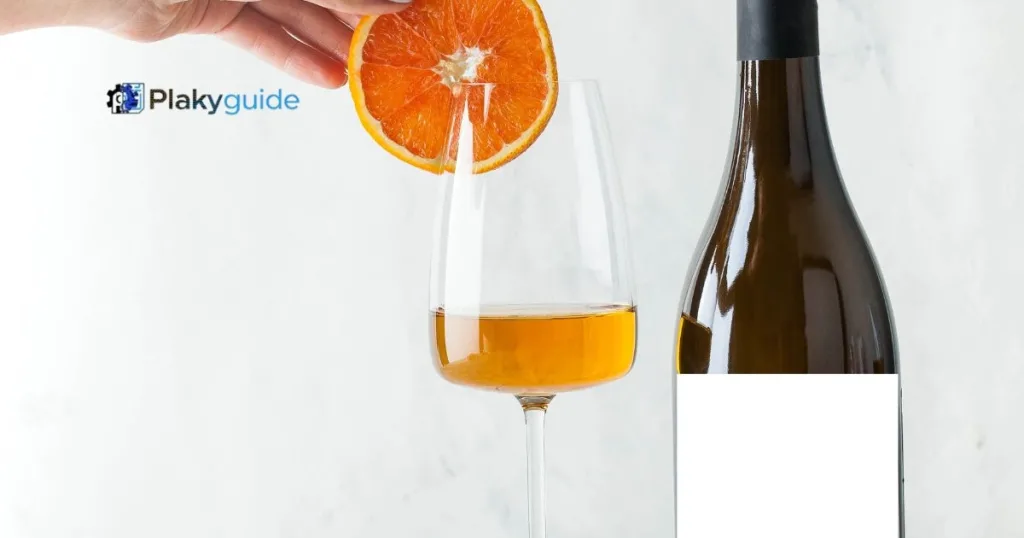
- Black and orange wines are both challenging in their own ways, but they accomplish their effects with diametrically opposing methods. Orange wine takes white grapes and treats them like they are reds and ferments in contact with the skin, so they get the colour, tannins, and weird flavours.
- Black wine begins with grapes that are densely colored from the very beginning. The winemaking is wholly traditional–it is the grapes themselves that give the wines their special character. Whereas orange wine needs help to attain its amber colour, This premium wine produces its inky colour naturally.
- Both styles are for adventurous drinkers who favor authenticity over familiarity. They are a form of dissent in a homogenized culture of wine, offering a unique experience that cannot be found from mainstream producers.
- The main difference is ease of approach. Orange wines usually test palates with their tannic structure and oxidative notes. Aesthetically appealing, this premium wine can present a more approachable flavor profile that leads those new to the world of uncommon wines.
Best Bottles to Try (2025 Edition)
Ready to explore this premium wine? These bottles are the top of the current teinturier renaissance:
- La Garagista Loups-Garoux 2021 (Vermont, USA) leaves a first impression of cold-climate winemaking that successfully tames the intensity of teinturier grapes. This wine is a blend of dark fruit with bright acidity and a mineral backbone.
- Ode Winery Amphora Alicante Bouschet 2022 (Portugal) is an example of the potential elegance of the grape. This wine is the fusion of strength and elegance made in a clay vessel.
- Envinate Albahra 2022 (Spain) is a demonstration that teinturier grapes can be used to add complexity to a blend without overpowering it. It is a dark fruit with herbal complexity.
- Scythian Wine Co. Scythians Red 2022 (California, USA) is the new California version of Alicante Bouschet – as respectful as it can be of the varietal’s character, while still expressing the terroir.
- Dr. Konstantin Frank Saperavi (Finger Lakes, USA) provides a flavor of Georgian winemaking tradition adapted to New York’s terroir. Rich, tannic, and deeply unique.
Final Remarks: Is Black the New Orange?
The story of the journey from Prohibition-era “bad” wine to today’s cult natural wine bars is one of the most spectacular redemptions in the history of wine. Teinturier grapes have stood the test of time, defying neglect for decades to become a symbol of authenticity in an increasingly commercialized wine world.
For those with adventurous tastes, black wine is a unique experience that’s hard to find elsewhere. These wines not only taste different, they look different, they feel different, and they tell stories that traditional varietals can’t convey.
Does this premium wine have the potential to reach orange wine’s mainstream popularity? Time will tell. But for the time being, these inky bottles are some of the most exciting advances in modern winemaking. They remind us that there are still surprises in the world of wine, if we’re willing to look a little further beyond what we’re used to.
Less important than what color black becomes as the new orange is what these wines embody: a dedication to authenticity, a celebration of difference, and a testament to the fact that sometimes the most overlooked grapes can make the most memorable wines. Mix yourself a glass and find out what you’ve been missing in the darkness.
Read more