


AI and Machine Learning in Marketing are changing the nature of business-customer interactions. Brands are no longer left to only their intuitions or conventional analytics but instead, they employ intelligent systems that learn by analyzing data, to present personalized experiences, campaign optimization, and anticipation of market trends.
World wise leaders including Nike, Coca-Cola, Apple, and Starbucks have already implemented AI and ML to remain competitive. Personalized advice to predictive demand planning, these corporations show that new technologies are not something that can be omitted but rather are a central part of marketing today.
This article is intended to describe the application of AI and ML in marketing through the explanation of its applications, the four main categories of machine learning, examples of practical AI and ML in digital marketing and real world brand examples.
AI and ML in Marketing What Is It?
To enhance customer experiences in real time today, marketers use AI and ML. An example is a personalization engine, which is a product recommendation engine that works on user browsing history, chatbots, which offer real-time customer service, and predictive analytics, which assist brands in understanding future demand. Starbucks Deep Brew AI platform suggests drinks according to the previous purchases, and Amazon uses ML to recommend products, depending on particular preferences.


As far as operations are concerned, AI-driven data-based campaigns are always more effective than traditional ones. To illustrate, email marketing tools take advantage of the concept of supervised learning, which enables the company to optimize the subject lines and the time of sending the email to get a better response rate in terms of open, and click-throughs. In the same vein, a customer targeting using ML models is far more accurate and segmented than manual, resulting in higher ROI.
The McKinsey report states that on average, companies that implement AI in marketing grow their sales by 20 percent and reduce their expenses by 30 percent. Gartner estimates that by 2026 more than 80 percent of businesses will turn to AI-based decision-making to control and streamline customer experiences. These expert opinions underline the increased need to incorporate AI and ML into marketing.
Although AI has its benefits, marketers should apply AI responsibly. Distrust and mistrust towards any company require openness about the use of their data, protection of their privacy, and the absence of algorithmic bias. Companies that are more ethical in their adoption of AI are not only compliant with regulations like the GDPR, but also bolster their relationships with their customers in the long term.
What are 4 types of machine learning?
Supervised Learning
This kind of ML is founded on the labeled data, in which the system is trained on pairs of inputs and outputs. Supervised learning is also popular in marketing, especially to predict customer churn, forecast sales or even in email marketing campaigns, where it is used to predict which customers are likely to respond to a different marketing campaign.
Unsupervised Learning
In this case, the algorithm detects the patterns of unlabeled data. It is employed by marketers to segment their customers into groups of behavior clusters that can inform their personalized campaigns. As an illustration, unsupervised learning has the potential to divide casual shoppers and loyal customers to enable businesses to use promotions to target them.
Reinforcement Learning
Reinforcement learning is based on the trial and error, the system learns through the rewards or penalties. It is applied in marketing to do dynamic pricing and optimize Ads to make sure that budgets are spent on the most productive channels. An example is real-time bidding in programmatic advertising which can be based on reinforcement learning.
Semi-Supervised Learning
This method is a hybrid between supervised and unsupervised learning, where the models are trained on very few of labeled data, and a great deal of unlabeled data. It can be useful in marketing when the companies have small labeled datasets, like when a new product is introduced, yet they still want to determine the customer preferences and trends.
What Does ML in Digital Marketing entail?
Machine Learning in digital marketing is the application of algorithms that keep improving marketing strategies with a continuous learning of customer data, without an explicit program being written. Compared to conventional analytics, ML is dynamically adaptable, which provides marketers with the option to automate decision-making and increase the efficiency.
Applications
- SEO optimization: ML applications assess performance of keywords, search intent, as well as competitor strategies and optimize SEO campaigns.
- A/B testing automation: ML models predict the best version of a campaign, rather than manually comparing campaign versions, which increases the speed of making decisions.
- Personalization engines: ML creates personalized web content, email-campaigns, and product recommendations to individual users, increasing engagement and conversions.
Example
- A typical case study is the recommender system in Amazon, which takes into account machine learning to analyse browsing and purchasing data. With the recommendation of the appropriate products, it not only increases customer satisfaction but also results in a substantial sales boost, which is how the digital marketing of the direct impact of ML on the increase in revenue.
What exactly goes on with machine learning?
Machine learning (ML) is at its most basic a simple loop: Data input – the algorithm learns – a prediction or decision. The system is informed based on massive amounts of structured and unstructured data, patterns are discovered, and the insights are applied to make predictions or automate decisions without direct programming.
Marketing Context
When applied in marketing, this process converts raw data of the customer, including browsing history, purchase frequency or social activity, into actionable information. As an example, a customer can be served with an extremely targeted ad because an ML model can analyze their previous purchases and predict what they would most probably purchase next.
Analogy
Imagine that ML is a personal assistant in training. Initially, you will give instructions (I like black coffee in the morning). The assistant picks up on trends (On Fridays you like a latte) and over time, predicts what you want without asking. On the same note, machine learning learns to adjust to customer behavior and optimally makes proactive campaigns.
Using machine learning to market.
Collect & Clean Customer Data
Collect information about numerous sources (CRM, web analytics, email interaction, social networks). The standardization and cleaning of the data is necessary to avoid biased results and ensure the accuracy of the data.
Choose an ML Model
Depending on your goals:
- Predict churn or lead conversion classification models.
- Regression (predicate sales trends).
- Customer clustering (group customers).
Apply to Campaigns
Create intelligence to use in personalized advertisements, content and dynamic pricing. Example: Netflix uses clustering and classification models to make recommendations on the show to watch based on viewing history.
Measure Results & Optimize
Constantly measure the indicators of conversion rates, ROI, and customer lifetime value. The more the data input a system receives, the smarter the ML becomes, as it is a process that is driven by the iteration.
How Can I Use AI for Marketing?
With the help of AI, advanced marketing becomes available to big businesses and small enterprises. The tools are now more accessible than ever, so marketers can implement AI in their day-to-day tasks, without having to possess a significant level of technical skills.
Marketers: The most popular AI tools
- ChatGPT – Makes blog posts, frequently asked questions, advertisement texts and customer tickets.
- HubSpot AI – Automates customer segmentation, lead scoring and campaign optimization.
- Jasper – Artificial intelligence-based email, blog, and advertisement copywriter.
- AI in Google Ads – Intelligent bidding, proactive targeting and programmatic advertisements.
The differences between Small Businesses and Enterprises.
- AI can be applied to small businesses to automatize repetitive processes (social media posting, email personalization) and do marketing on a budget.
- Scale Customer journey mapping, advanced analytics, and global campaign orchestration are some of the ways through which enterprises utilize AI.
- Trust factor: This will require businesses of all sizes to adjust their implementation of AI-driven marketing strategies with ethical use of data and customer consent.
Case Studies: How Large Companies use Machine Learning.
What is Nike Doing with Machine Learning?
- Nike Fit App: This application collects customers with the help of computer vision and ML and suggests the correct shoe size by scanning feet.
- Individualized Product Recommendations: Recommendations on the Nike app and site are customized according to previous behavior.
- Predictive Demand Planning: The planning predicts the products that are going to trend in various regions hence saving on inventory wastage.
- EEAT Tie-In: Nike is in the authority concerning the implementation of ML to find application in the retail business.
What is machine learning at coca-cola?
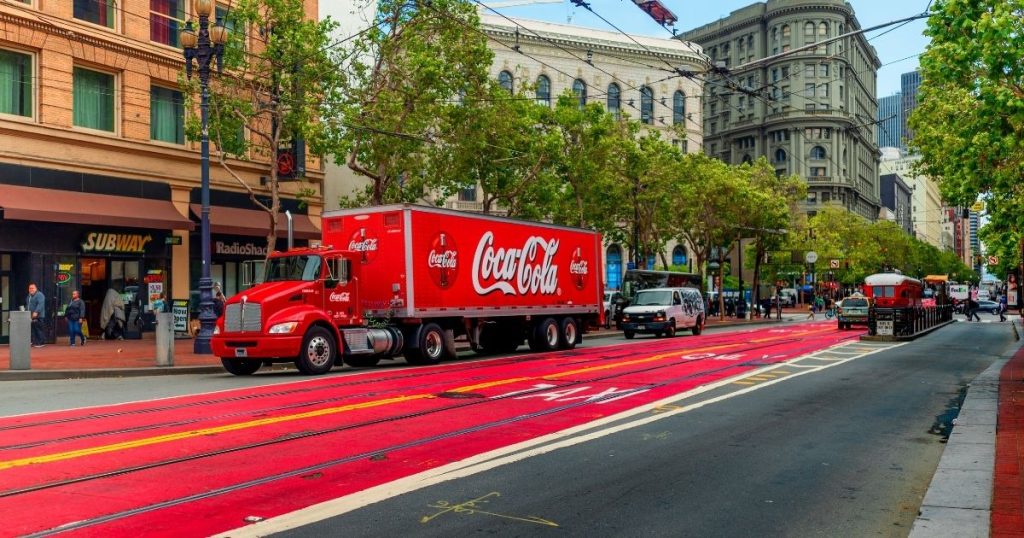
- Artificial Intelligence-driven Vending Machines: Customize to the local preferences and weather conditions.
- Insights Customer Behavior: Interprets customer loyalty programs buying data on how to target the promotions.
- Product Innovation: ML is used to find flavor trends and to test new product ideas (e.g., Coca-Cola Cherry Vanilla).
What is Apple Doing with Machine Learning?
- Customized App Store Recommendations: Suggests apps depending on the user and activity.
- The Evolving Intelligence of Siri: Siri is constantly learning as users engage with the system to be more intelligent and respond with more context.
- On-Device ML: This approach focuses on privacy, i.e. data is processed locally, not on a server, which creates customer confidence.
What is the use of machine learning at Starbucks?
- Deep Brew AI Platform: The app can customize the Starbucks experience, with recommendations of what to order, and when to order it, based on previous purchases and weather.
- Recommendation Systems: Proposes food suggestions or time-limited deals that are based on customer behavioral patterns.
- Store Operations Optimization: It leverages ML to predict the staffing, inventory, and supply chain logistics.
Is Nike Using AI Models?
Yes. However, Nike has been gradually applying AI models to digital and retail marketing, showing that the company is a pioneer in information-driven marketing.

- Predictive Demand Forecasting: Nike applies AI to predict demand of products in various regions and seasons before overproduction and customers receive what they want, when they want it.
- Customized E-Commerce Experiences: The Nike online stores use artificial intelligence recommendation engines to generate custom online shopping experiences, including offering shoe size suggestions (Nike Fit) and suggestive online wearables, based on user browsing history.
- Supply Chain Optimization: Ml models help make the logistics process efficient through predictive inventory demand and finding the most cost-effective delivery routes to guarantee faster delivery and a seamless customer experience.
- Nike demonstrates that a data-rich and emotionally appealing marketing is possible by incorporating AI modeling with brand storytelling.
What has Nike done to effectively market using AI and ML?
Marketing success at Nike is not about selling the products, as it is about creating the long-term engagement with the product through personalization and innovation.
- Powerful Customer Relationship: Nike uses ML-based personalization in apps, emails, and online shops to reach the customers personally.
- Storytelling + Data-Driven Insights: Campaigns such as the Just Do It will continue to be emotionally resonant, however, behind the scenes, ML will take care of the appropriate story to the appropriate audience at the appropriate moment.
- Nike Run Club: Nike Run Club is an application that gathers the fitness data, analyzes the performance history and provides the personalized training plans combining the narrative of the lifestyle with the actionable and customized training aspects.
- AI-Loyalty: Nike has enhanced its NikePlus system to be more personalized, which ensures that its NikePlus system becomes a feedback system of loyalty and constant interaction.
This combination of innovation and technology makes Nike one of the most successful brands in the world in terms of utilizing AI in terms of marketing.
Conclusion
Machine Learning (ML) and Artificial Intelligence (AI) have turned marketing into an intuition-driven marketing practice toward data-driven decisions and adjustability. Responsible use of customer data can enable marketers to provide personalized experience, optimize their campaigns, and establish a long-term relationship of trust.
Marketing is to be found in the future:
- Hyper-personalization – product, advertisement, and content are designed to match specific users.
- Automation – lessening manual efforts and allowing marketers to devote their time to strategy.
- Ethical AI – making algorithms (and AI) transparent, private and fair.
Successful uses of AI and ML on a scale can be demonstrated with brands such as Nike, Coca-Cola, Apple and Starbucks. Nevertheless, companies of any scale may begin small, trying out AI tools to create content, automate campaigns, or get insights into customers and then expand their activities slowly.
When you would like to remain competitive in the digital era, it is time to start using AI in your marketing. Even minor measures such as an automated A/B testing or personalization engine can be measured in terms of engagement and ROI.